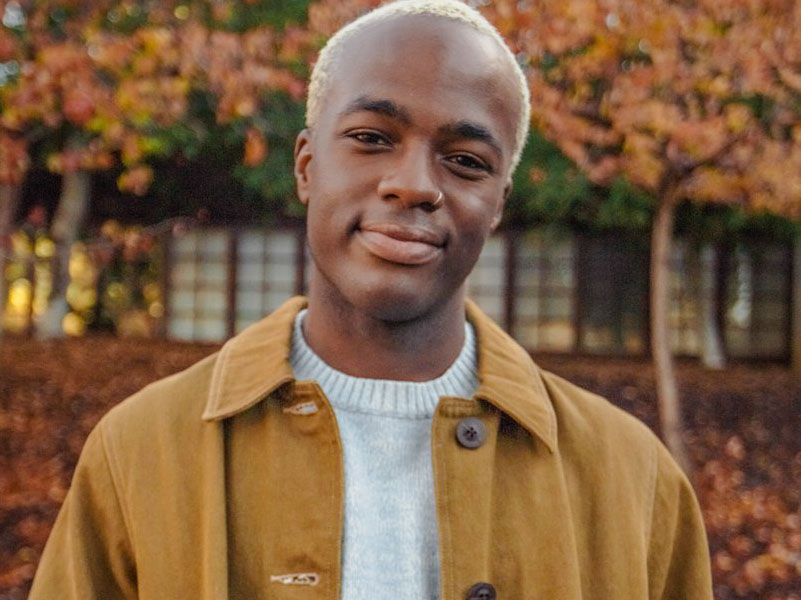
Jeremiah O. Rhodes is a renowned journalist and filmmaker hailing from the American South. With a keen interest in power dynamics, Rhodes has explored stories related to the use and abuse of power, as well as those most affected by it. His reporting has delved into the intersection of race, sexuality, history and identity. He’s earned multiple accolades from the College Photographer of the Year, Scripps Howard Awards and the National Press Photographer’s Association. In this Q&A article, Flourishing Fresno delved deeper into Rhodes’ experiences, insights and inspirations as a journalist and filmmaker.
Flourishing Fresno: What are some of your journalistic dreams?
Jeremiah O. Rhodes: I hope to make the news more equitable. I want to do something that makes people who wouldn’t normally read the news feel like the news is valuable to them.
Flourishing Fresno: What has been your favorite project that you’ve worked on so far?
A: I think they all hold a special place in my heart because they all taught me a bunch of stuff. But if I’m not giving a PR answer, my favorite was actually my most recent one that came out in the SF Chronicle a couple of weeks ago. It is about a housing co-op in San Francisco that is specifically geared toward low-income people living with HIV. It highlights how this house creates a community among people who often experience severe loneliness and don’t have access to traditional structures like spouses or children. It was really fun to report and a lot of my sources and I still talk. It felt like something that I would have loved to have read when I was a kid. A community that people don’t think about a lot of times, we talk about it as if everyone from that generation died. But a lot of them are still here, still battling things that are preventable. That was a really special one for me.
Flourishing Fresno: How have you been able to cover so many areas of the country?
A: Well, I’m an army brat, which means I grew up all over the southeastern US, and I’ve lived in around eight states in my life. I’ve also been fortunate to attend two well-resourced universities, my undergraduate university and Berkeley, where I’m currently studying. I made a promise to myself that if I was going to suffer through four years of undergrad and two years of grad school, then I was going to stretch this school for all that it’s worth. I was very adamant about taking advantage of all the opportunities that came my way, whether it was international trips or anything else that could help me grow as a journalist.
Flourishing Fresno: I just watched your “Bitter and Sweet” documentary. I think that was great. How did you transition from video journalism to writing?
A: So actually, my background is in video. I went to the University of North Carolina at Chapel Hill for undergrad and majored in photo and video journalism, with a focus on documentary film. So video was actually my first medium. I made the film you mentioned, “Bitter and Sweet,” during the pandemic. It wasn’t supposed to be my final project for undergrad, but circumstances led me to make it during a crucial time.
Regarding the transition to writing, it has been a bit of a difficult one, to be honest. I think that writing for video, scripting for video, and putting together a format for video are very different from doing so for text. Even down to the order of a video piece versus a text piece, the structures can be very different. I feel like I write a video like I would tell someone a story, whereas text has a more rigid structure that isn’t always conversational. However, I think that having a background in video and photojournalism makes it easier for me to write narrative pieces, especially since my documentary film was people and issue-focused. In my experience, it’s been easier to transition from video and photo to text than the other way around, but there’s still a learning curve.
Flourishing Fresno: How do you approach potential sources?
A: So there are three different kinds of sources in stories: the narrative grounding of your story, the emotional component, and the experts such as scientists. Then there are the spokespeople, the institutions that I’m writing about. For instance, in the case of the homeless shelter that closed in Fresno, the Emergency Operations Center (EOC) people were there. It gets complicated because sometimes a source can be both an expert and a narrative source, and it can be tricky to figure out how to approach them.
When it comes to narrative sources, who are people with firsthand experience of the thing I’m reporting on, I approach them slowly, almost like in an old safari video, making no sudden movements. I want to make them feel comfortable so that they will open up to me. Once a wall goes up between us, it can be hard to break it back down. So, I try to approach them with that in mind, making sure that they feel they have agency in the relationship.
Flourishing Fresno: What do you do to ensure your interviewees feel comfortable during the interview process?
A: When I sit down for an interview or the first time I talk to someone, I always make sure to let them know that they have the power to stop the conversation at any point. This sense of agency and control extends throughout the entire process, even after the interview is over. Even if it’s a couple of weeks later and they feel like they’ve said too much, they can call me up and say, “Take everything back, I don’t want to be in the story anymore,” and I’ll have to figure out how to salvage it.
Flourishing Fresno: Have you ever had an editor push back when an interviewee who was on the record wanted to retract?
A: Oh yeah, definitely. With video, especially. And to be honest, I’ll always say it’s my story. So I’ll kill it if I have to. When it comes to safety and humanity, I’m non-negotiable. If you don’t accept that, then we don’t have a story. I don’t care. I had a story where someone wanted to remain anonymous, and my editor did not love that. But I basically said, “They want to be anonymous because people are being shot. We’re not going to name them.” My editor, a straight woman, was like, “That’s not how we do it. Are you okay with that?” And I was like, “We don’t have a story then.” It was kind of open and shut. She was like, “Okay, fine. We have to put why we’re making them anonymous.” I don’t mind doing that, but you’re allowed to have boundaries. I am very much pro threatening to kill a story. I tell my sources, “Hey, I’m not going to do it anymore because my editor didn’t love this or this or this.” I’m sorry that I wasted your time with it, but I would rather you remain safe than risk that for me to get a story. I don’t care about that. It’s not about me. So yeah, it has happened, and I will just kill it. I’m not sacrificing someone’s safety for a clip.
Flourishing Fresno: What is your preferred method for reaching out to sources?
A: I confess I suffer from severe phone anxiety, and I know firsthand how stressful it can be to make a call. However, if you have a phone number for any of your potential sources, I recommend calling them and leaving a message. Sure, it’s not ideal because you can’t delete a message after it’s been sent, but if you don’t receive a response, then try email.
I have even used Instagram and Twitter in the past, and though it may seem strange, it can be effective.
Calling should always be your first plan of action if you have a phone number because you’ll get a quicker response. I think that hearing your voice allows your source to understand you a bit better, and it helps in establishing a connection. But keep in mind that not everyone is comfortable speaking on the phone, so be flexible and adjust accordingly.
I have some professors who are old and white, and they prefer phone calls over email, while others may not. It’s all about knowing your source and their communication preferences. However, going to someone’s house unannounced is a big no-no. I know people who have done that and have been threatened with a gun. If they invite you over, fine, but don’t show up at a stranger’s house unannounced. Just please don’t do that. I beg of you.
Flourishing Fresno: Can you share your secret to success and how have you leaned into it?
A: My best friend Sidney and I talk a lot about imposter syndrome. One of her favorite things to say is that what you think of yourself doesn’t actually matter. Because you don’t hire yourself. If the hiring managers who are paid to do this let you win, and you shouldn’t be there, they suck at their job, not you at yours. And so, I’m kind of like, “Oh, you’re so right!” If they let me in the door and shouldn’t have, that’s on them. But I’m going to apply because my application actually is not about how I feel about myself, it’s about how this group of people, who are paid to evaluate people, feel about me. So, I have crippling insecurities personally, but I’m also like, “I don’t hire me”, so it doesn’t really matter that much. Which is probably not helpful and not good advice, but it’s helped me a lot.
But I think also on the front end, before that interview, one thing that a lot of journalists forget is to recognize their own humanity. In my story in the Chronicle recently, in my first interview with my main source, Paul, I shared about myself and why this mattered to me. I was a young queer kid growing up in the South. I thought that everyone who was gay would die at 30 because you all died in the ’80s. So I think it’s a give-and-take situation. I am talking to you as a reporter, but I am also a human who’s invested in this. But I want to get you right. I owe you this. I’m not just here to take from you and then you never hear from me again. I want to get you right. So those kinds of things remind them that you are human, and remind yourself that you are a human too.
The questions and answers in this article are excerpts from an in-class interview with Jeremiah conducted via Zoom. We thank Jeremiah for graciously sharing his experiences and insights.
 Flourishing Fresno