
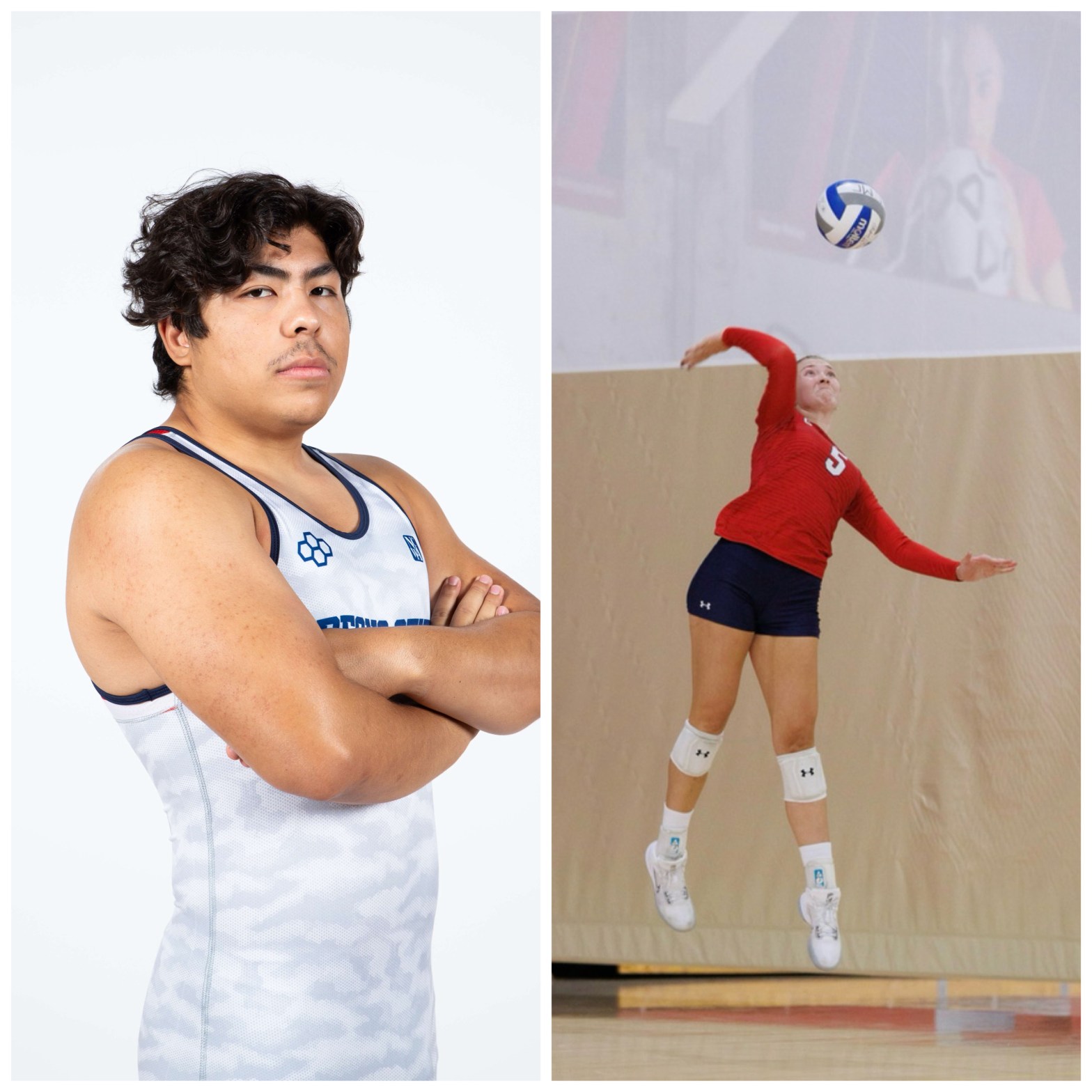
Fresno State senior, Justin Nieves at a club wrestling competition (via Justin Nieves)
By: Makenna Deeth and Yesenia Zepeda
Justin Nieves
Shame and guilt ran through Justin Nieves’ body as he stared at the weight scale contemplating if starving himself for the past three days was worth it.
His need to gorge his face with food and then starve himself was a constant mental battle for Nieves. Unfortunately this is a normality for millions of other individuals around the world, especially young athletes.
Justin Nieves, a senior at Fresno State majoring in exercise science, started wrestling at the age of 11 where he wrestled throughout middle school and high school and was a state qualifier at Modesto Community College.
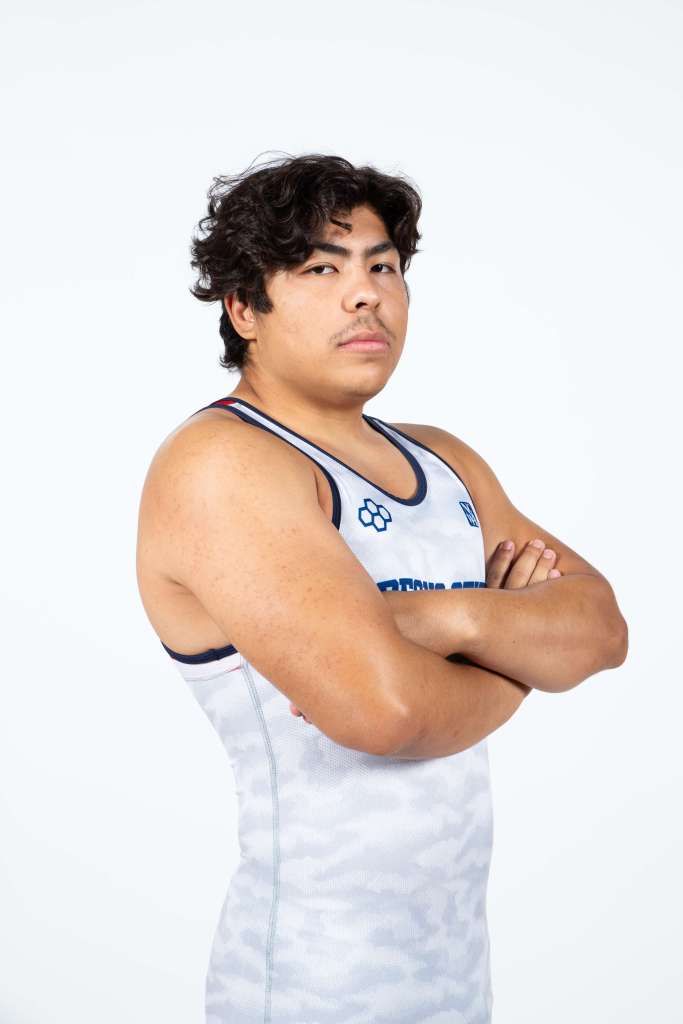
Justin Nieves for Fresno State’s wrestling club, 2023 (via Justin Nieves)
The diet of a wrestler is unlike any other sport, it takes a mentally tough person to become a wrestler to be able to handle all that is thrown your way as far as dieting. One day you will be told you have to be ten pounds lighter and two days later you will need to have gained ten more pounds. A “bad” day of eating for a wrestler is eating way too much, whereas in non-athletes, the problem might be not eating enough. “There would be days where I say that I need to eat healthy, I say I need to be on weight and then I have a really bad day. The bad day could look like me telling myself, ‘It’s not that bad, it’s not that bad’ and then I’m like ten pounds heavier the next day,” says Nieves.
Nieves dealt with his binge eating throughout college and didn’t have a support system to aid him out of those tough times. If a coach notices one of their wrestlers looks overweight for their weight class, the expectation and pressure of meeting your weight goal can quickly turn into a toxic cycle. Nieves began to internalize the feelings he dealt with as a result of his weight fluctuation. Unfortunately he had no one to reach out to at the time, there was no close relationship with his coach or parents. He was left to deal with this internal and mental war of binge eating alone wondering what steps he should take next.
Nieves began wrestling for Fresno State’s club team this past spring. Containing around 40 athletes that are both female and male.
Maintaining a healthy diet and safely losing or gaining weight is a confusing mental and physical war in a wrestler’s world. There is an immense amount of pressure these athletes face and fear of disappointing the coach or not meeting required goals. Nieves describes the pressure of keeping your weight down as being the culture of wrestling. “Honestly, there’s a ton of pressure, it’s always there and it’s normalized in that wrestling culture that no one really bats an eye,” says Nieves. Nieves has been cutting weight recently and was questioned by a friend at the gym if he was sucking in his stomach. Nieves responded with, “No, why?” His friend then responded, “You look so good, it looks like it!” This caught Nieves off guard because he never hears anything remotely close to that in the wrestling room. Compliments are hardly given out to wrestlers, appearance is rarely a factor of importance. It’s all about the number on the scale.
One of the main contributors to eating disorders developing within athletes is how other people perceive them and judge them based on their weight. “You could lose twenty pounds and look ten times thinner and someone that’s not a part of it says, ‘You look great’, and you go back to the wrestling room and they’re like who cares,” says Nieves. He gets approval from his parents telling him he looks great, then he goes back to his wrestling team and gets told he looks bad. It’s a constant battle to find out who is right and if it is his fault.
Along with wrestling at Fresno State, Nieves gives back to the wrestling world by coaching a high school men and women’s team of his own. Already beginning to notice eating abnormalities within his athletes. Some of which were on the verge of a binge eating disorder. “Realistically, it definitely starts in the youth… the younger they are, the better example you have to be, and that’s kind of the example I’d like to set,” says Nieves. The fascination with the number on the scale within high school athletes is big and Nieves fights to control that within his athletes, because at the end of the day, it’s about performance. If you aren’t eating balanced meals, you will not be performing to your fullest ability. “I’m trying to teach them healthy habits so that when they go to college, they can enjoy themselves,” says Nieves.
It’s common within athletes to feel like there’s no time to eat because of the hectic schedules, but when some wrestlers can’t find the time to eat, they get happy about it. Nieves recalls some of his wrestlers saying things like, “Oh I forgot to eat today… nice!” Having the mindset that this missed meal would reflect positively on the weight scale. The closer it gets to the end of a wrestling season, the more intense it gets as far as needing to cut or gain weight to fit into a certain weight class. Otherwise, if a weight class does not get filled, it’s an automatic loss.
He looks to establish an emotional connection with his athletes early so they are going in the right direction and embarking on good, healthy habits. Eating disorders have the heaviest impact on women, so it can be tough to have those difficult conversations when something seems off in a female athlete’s eating routine. Nieves expressed that he has learned a lot ever since coaching young women, “Girls will be more open with their emotional state than boys will.” He explains that it’s easier to figure out what’s wrong with his female athletes, as they are more willing to open up and explain what’s going on and the issues related to poor food intake. Whereas the truth from his male athletes is a lot more difficult to deal with. Eventually intervention needs to be taken place and parents are made aware of the athletes poor eating choices.
When dealing with his eating disorder in college, Nieves wanted someone to look up to for mentorship, someone that is always there for advice and care whether you want them to be there or not. Athletes would be better supported if an assistant coach was fully there to support the athlete outside of the sport. A therapist in a way, but on a sports team, so athletes can rely on a professional who is there to guide them in personal struggles.

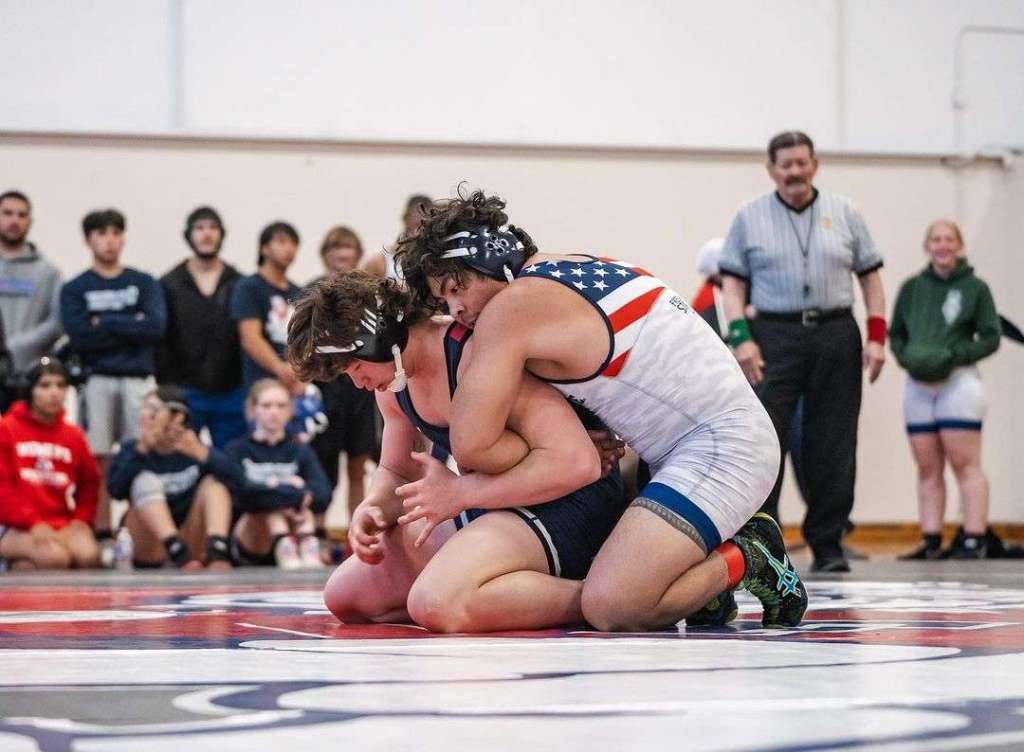
Justin Nieves wrestling against San Jose State’s club team (via Justin Nieves)
Nieves recalls times where he wouldn’t post pictures of himself wrestling or just everyday photos on his social media account because he “wasn’t thin enough”, resulting in him deleting his social media accounts for good. This is a normal feeling as a young person on social media, the feeling of simply not being as skinny as her or him, or wishing they had someone else’s body and appearance.
Although there is a lot of love for the sport this does not diminish the struggle in revolving one’s world around weight. “You might not be able to help the kid in front of you, but the next one you might save him a lifetime of heartache,” says Nieves.
The various types of eating disorders
There are three types of eating disorders most of which are commonly found in female teenagers across America. Anorexia nervosa, bulimia nervosa and binge eating disorder are all a form of disordered eating. The commonality between all eating disorders is the constant worry about body weight and body shape.
The most common form of disordered eating is called Anorexia Nervosa and it has been around since the 1500s, first diagnosed in Italy. When researchers first started researching Anorexia Nervosa they found it was overlooked in young men and girls, it started becoming a problem once these young adults reached college. Anorexia Nervosa has a body mass index (BMI) of 17.5 or less which is categorized by the CDC as unhealthy. The typical BMI of a healthy person should range from 18.5 to 24.9. The human body needs nutrients from food to survive and develop, people with Anorexia Nervosa have a significantly low body weight during their developmental stages.
In a presentation done by Kathy Rindahl, an associate professor in the school of nursing at Fresno State, showed eating disorders have now become more prevalent and deadlier than the opioid crisis. According to the White House, “Nearly 1 in 10 Americans are expected to develop an eating disorder in their lifetime.” The COVID-19 pandemic has made life for people with eating disorders even more difficult. In a study done by the White House, “National eating disorder hotlines have seen a more than 70% spike in the volume of calls and chats since the pandemic started.” The number of hospitalizations for eating disorders has doubled during the time period of the pandemic. There are 10,200 deaths by eating disorders per year according to Rindahl.
Bulimia Nervosa is eating large portions of food in one sitting and then forcing yourself to get rid of the food or extra calories. Individuals who suffer from bulimia nervosa deal with self-induced vomiting, misusing laxatives and weight loss supplements. Maintaining as little calories as possible is the mindset. Other factors that contribute to individuals lowering calories by fasting, excessive exercise, and strict dieting. Individuals suffering from Bulimia Nervosa are constantly judging their weight and unrealistic image of what their body looks like. “The person with the disordered eating also has a disordered body image typically, they see themselves being fat,” says Rindahl. Bulimia Nervosa is typically higher in males than females.
Binge eating disorder is eating within a two hour period, the amount of food the person is consuming is larger than most people would consume. Typical behavior for someone suffering from a binge eating disorder is consuming large amounts of food at once and then not eating for a couple of days after an episode.
Eating disorders have the power to completely take away a person’s confidence in themselves and a distorted mental image of what their body genuinely looks like. The damage begins with gradually intaking less food and forcing to purge whatever is in one’s system.
One of the most deadliest categories of eating disorders affect athletes. Athletes have lifestyles in which not properly supplying nutrients can have grave consequences. 9% of the United States population (28.8 million Americans) will suffer from an eating disorder in their lifetime, according to the National Eating Disorders Association. The number one group at highest risk is athletes. So what is the connection between the two? Athletes developing eating disorders become so fixated with their calorie intake, how much fat is on their body and their weight. Self worth then becomes based on performance. 42% of high school athletes struggle with some form of disordered eating, according to Fresno State nursing professor, Kathi Rindahl. Athletes are the group that is least likely to seek help from medical professionals and therapists. Some of the top sports that are likely to have athletes develop eating disorders are wrestling for men and gymnastics for women.
Issue Locally
Currently Fresno State has very little or no information on the standing issue of students who deal with an eating disorder. A lack of education and urgence on the matter is not being taken into account, this results in people being afraid to reach out for help or being completely unaware of the fact that they are struggling from an eating disorder. Student athletes who train for sometimes up to three hours a day don’t have the resources here to talk to a professional who can provide help. A massive college campus such as Fresno State with so many students enrolled is bound to have students who suffer from eating disorders.
These students are away from home struggling financially, involved in sports and clubs while enrolled in up to 18 college units. Athletes are bound to eat less, but the problem starts with a positive outlook on how they look due to weight loss around poor eating habits. Screenings for student athletes here at Fresno State are unavailable, although urgence toward providing this is important. Students fail to reach out for help when they are struggling since resources are not being heavily publicized.
There are clinics within Fresno county to go to and receive treatment and counseling, but most of these require insurance and are cost heavy, this should not be the main option for students and student athletes who are suffering in silence.
Issue Nationally
Eating disorders are a nationwide problem, starting out in high school and progressing all throughout college. One of the common issues between all people who suffer around the United States is social media. We live in a society that makes it uncomfortable to live in our own body based on what we see online, self image is dropping more and more. Eating disorders are on the rise and have been prior to the pandemic.
The issue worldwide is the culture that has been built and the expectations of that culture that surround body weight. Some coaches have told their young female athletes that they need to be at an 18 BMI which is severely unhealthy and a part of the problem. Once that gets into the person’s head, they may start to think they are overweight, when in reality they are perfectly healthy. Whatever the reason behind someone developing an eating disorder is, the most common factor is not receiving the proper help and care. Athletes suffering are too afraid to speak up to a coach because they don’t want to seem weak or troubled.
Eating disorders cause serious medical problems along with destabilization of bones and nutritional deficiency. Female athletes who lack nutritional value and develop eating disorders may also experience problems within their menstrual cycle, skipping periods. These athletes work out an extreme amount and don’t replenish their bodies with the proper care and as a result, the body begins to shut down.
Oklahoma State University has worked to create the Body Project which is a “dissonance-based body-acceptance program designed to help high school girls and college-age women resist cultural pressures to conform to the appearance ideal standard of female beauty and reduce their pursuit of unrealistic bodies.” The Body Project has been extremely successful in reducing the onset of eating disorders.
Makenna Deeth
My name is Makenna Deeth, one of the writers for this story. I have suffered from an eating disorder since the beginning of the pandemic and am still on my journey to recovery. As a student athlete myself, I have seen my body transform over the years, in healthy ways and in not so healthy ways.
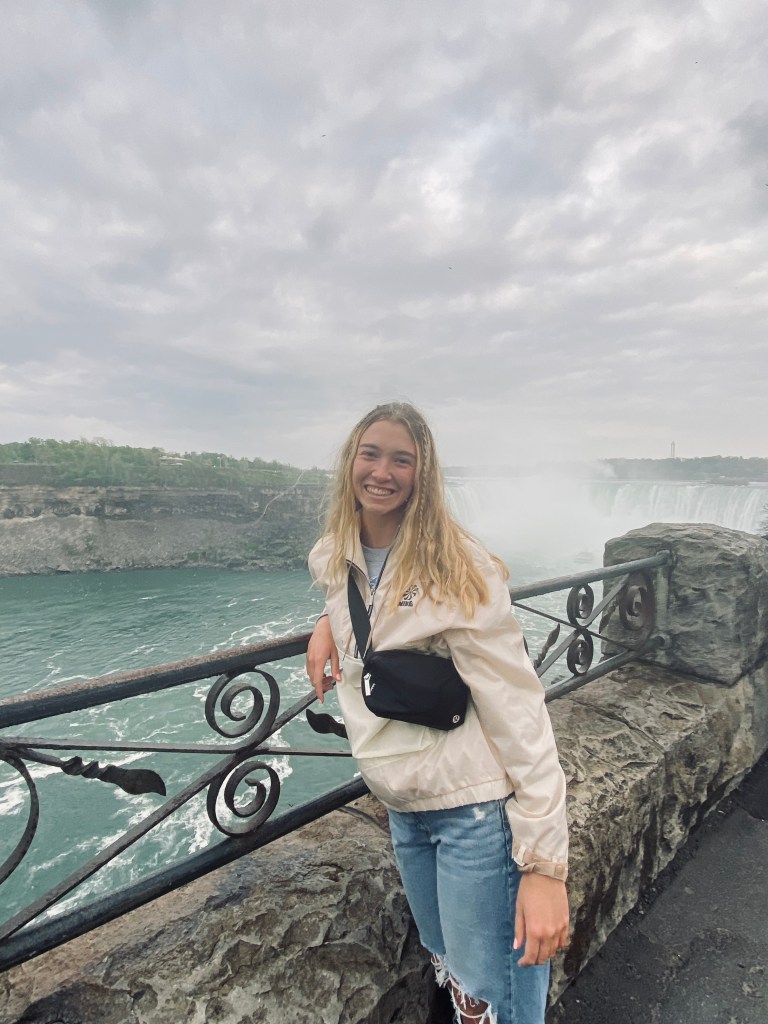
Makenna Deeth at Niagara Falls, New York in May 2023 (via Makenna Deeth)
I played volleyball all throughout high school and into college at a community college and transferred to Fresno State this fall where I am currently playing club volleyball. During the pandemic everything I loved to do was shut down and that resulted in lots of sitting at home and eating, lots of it. I have always been a physically fit person with a long, thin/slim figure as a six-foot-tall woman who loves to workout. Over the course of those nine months at home, I gradually started gaining weight. I wasn’t working out to the level I was previously, I was eating junk food multiple times a day and sat in my bed. I was living a “binge eating” lifestyle.
I braced the outside COVID world about one to two times per week to get groceries and hardly any of them were healthy. This was my lifestyle, an unhealthy diet with little to no exercise. I had completely let go of the athlete I once was.
Everytime a picture of myself from 2020 comes up on my phone, I instantly cringe and become triggered. That person was unrecognizable.
Eventually, things started opening back up in the world and my high school slowly let us start being active and playing volleyball again. During this time, I was receiving a few comments from family members saying I looked a bit heavier, but nothing that concerned me. I had the support system around me to get help, my parents and friends, but I never addressed the problem within myself.
I then graduated high school and moved onto community college and started getting back in the swing of things as far as working out goes. I had a lot of work to be done to get back to how I looked. The “work” started with not eating.
During my freshman season, I lost a bit of the weight but still not enough as I wanted. I wanted to look like every other volleyball player I had been shown my whole life.

Makenna Deeth during her collegiate beach volleyball season, March 2023 (via Makenna Deeth)
Fast forward to my sophomore season, this is where the damage began. Early in the season, the coaching staff recommended I make the switch from a middle blocker to an outside hitter. I was excited to embrace the challenge but I knew this meant a shift in how I had to look. Outside hitters are the fastest, most athletic players on the court. I had to become that. My training level was taken to another level, the practices were long and tough and after practices I drove straight to my home gym to lift weights and get extra conditioning in.
Around the start of the season I also picked up a job. My typical day was getting up in the morning, doing classwork, attending zoom meetings, heading to our lift, then to our two and a half hour practice, then either coming back home to go to the gym or heading to work. This daily routine was done on little to no food.
The weight started dropping fast and I craved how I started to look. I knew it was because of how hard I was training and practicing, and how little I was giving back to my body to replenish. I started receiving more attention from people and I thought it was off the fact that I was becoming so fit and was the leader of our team. Burning up to 2,000 calories per day up to five days a week with no food was my routine throughout the season.
Eventually the end of the season hit and my body was running on nothing. I was hardly sleeping at this point and was dealing with the normal stresses of a young college student. At this point, people started to notice my eating patterns and would make sure I was eating, I still wasn’t eating enough.
I attended a work meeting one morning in November of 2022 after not sleeping much or eating the day prior. My vision went black and before I knew it, I cracked my jaw on the floor and fainted. My body couldn’t handle it anymore and was completely burnt out. I was taken to the emergency room and had a bunch of tests run and everything turned out normal except for my nutrition levels. The cause of my collapse was the two and a half months of malnourishment. And I was satisfied with that because I thought I looked great.
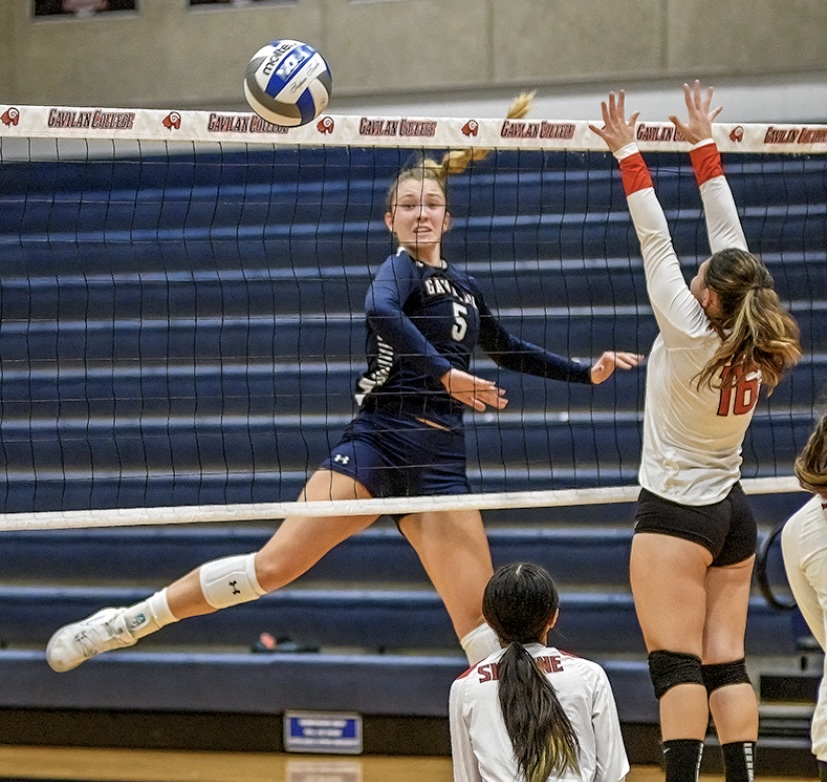
Makenna Deeth going up for the attack during her 2022 collegiate indoor volleyball campaign (via Gilroy Dispatch)
After that day, my eating slowly started to improve. Since that day I have still lost more weight, but I am still progressing and trying to get my eating patterns back and healthy. There have been plenty of days of slip up recently where I’ve gone without eating a full meal and when that happens, I get migraines, low energy, and even notice a shift in my mood and how I act around others.
The truth is, I am working out and training less than I was a year ago and I am worried I will get back to the weight I once was. There will be days where I skip meals because I’m afraid one balanced meal is going to harm my appearance. Newsflash, it won’t and it will actually benefit your physical appearance and health.
Without eating, your body doesn’t function as a human being. It can’t recover from activities we perform daily. I learned that the hard way and encourage young athletes to make sure they find the time to eat three balanced meals a day and don’t get caught up in what your peers or family/friends have to say about your appearance. I still receive comments from friends and family members saying I look “skinny” or I look “so good.” Little do they know that it was all done in an unhealthy way.
The only person you have to please and take care of is yourself, so make sure to make yourself a priority.
Solutions
A licensed professional assisting a coach would benefit athletes in a multitude of ways. Providing this resource for athletes to seek healthy coping mechanisms and solutions to traumas and personal issues within their mental health is needed in today’s world in sports.
As well as an additional nutritionist that works with student athletes within the entire school.
Athletes shouldn’t be struggling alone and by providing a comfortable environment, this can lead to more individuals speaking up and seeking help. Licensed professionals who specialize in eating disorders would best benefit athletes in their physical and mental journey. Education on proper eating habits should be provided to all members of a coaching staff.
Coaches should be aware of how to properly adjust towards an athlete that is combating an eating disorder is helping out an athlete with an eating disorder. Keeping a balance for the athlete where they can practice, just not as intensely, until proper treatment and proper nutrition is received to fully immerse themselves in the sport.
Oklahoma State, Tulsa hosted a body image and eating disorder conference in 2019 that further educated professionals on up-to-date treatment options for eating disorders. It starts with educating oneself on eating disorders, as well as being accepting of them. Creating a safe place for athletes where instead of feeling judged, they can openly express frustrations and struggles. Dr. Paula Edwards-Gayfield, an assistant vice president at the Renfrew Center, an eating disorder facility in Dallas, Texas led the conference at Oklahoma State. “Edwards-Gayfield pointed out that when it comes to something as sensitive as body image and eating disorders, experts in the field need to be accepting and understanding of anyone that may walk through the doors of a clinic. Yet, also understand the pressures that might influence body image and disordered eating in the first place,” according to OK State.
Adding courses in health programs in high schools and colleges to educate on eating disorders and how to identify them is the first step. Treatment programs require more advertisement and awareness towards the issue. Providing affordable treatment plans and ideas towards insurance funding treatment would aid tremendously. Many suffering with an eating disorder rarely know who and where to reach out to. So discovering that aid may not be affordable can be disheartening and detrimental.
For students and athletes suffering silently at Fresno State, there is counseling, group therapy, and workshops for patients overcoming an eating disorder. This all can be found in the student health and counseling center on campus.
Initiating screenings at universities across the country for student athletes needs to become a priority. This starts with everyday before practice, the athlete walks in and answers a few questions from his/her phone or even better, answers questions from the team’s mental health specialist.
University of Southern California is one of the universities that has screenings for eating disorders in their dance program, dance being one of the leading sports with athletes suffering from eating disorders. Eastern Michigan University has screenings for eating disorders as well, along with x-rays offered for all students who may be suffering. According to Eastern Michigan University, “Eagle Nutrition Services (ENS) offers a variety of nutrition and health services empowering clients to accomplish goals and lead a healthful lifestyle.” Programs and services that are well known and accessible within a university need to be established.
Criticisms of the solutions
Issues in finding treatment is having a proper diagnosis for disordered eating. Individuals suffering from an eating disorder must have a diagnosis in order for the insurance to cover the treatment. Treatment is not as accessible and many individuals lack education and awareness on the subject.
With the pressure of society making an individual fear or diminished their worth based upon irrational expectations. Eating disorders are also not treated equally to any other medical conditions or mental disorders covered by insurance plans. Creating delays and dilemmas for those seeking treatment.
The best case of survival for someone dealing with an eating disorder is to identify it in its earliest stages. According to Kathi Rindahl, “Early identification is the best chance of survival, so the faster and the sooner you can identify an individual and get them the help they need, the better.”
Walking through the library and finding individuals willing to open up to us about their story was an unexpected slap in the face. Students gave us puzzled looks, as if they had no idea what an eating disorder even was. This showcases the negative light that has been cast upon creating open talk about eating disorders. The lack of awareness and treatment available in schools is partially to blame.
Treatment shouldn’t be “one size fits all”. Someone who is suffering from a binge eating disorder can’t be treated the same as someone who is suffering from anorexia. These two need completely different treatment options and dieting plans to regain a healthy lifestyle. This is a common stigma within the United States, that eating disorders should be treated equally. Each eating disorder is different and should be treated as such.
There may be treatment programs within schools, but the problem is that they aren’t being publicized, so individuals that are suffering lack the awareness to know they’re dealing with. A hundred treatment programs can be instilled in each campus, but if no one knows about them, how will these athletes and students receive the proper tools to succeed and prevail over an eating disorder?
The first step in dealing with an eating disorder is identifying it within yourself. Then, reaching out for help. You are not alone, please reach out.
Eating disorder hotline: 1 (888) 375-7767
 Flourishing Fresno